
Is Hiring an Interior Designer Worth It? What You're Really Paying For
Written by Catherine Seagrave, Co-Founder of The Living House, online interior designers specialising in family homes, with 35 years of combined design experience.
It's probably an odd thing for an interior designer to say, but I don't think everyone needs an interior designer.
If you love spending your evenings researching furniture, have a clear idea of what you want, enjoy working through floor plans and can confidently make decisions about colour, scale, lighting and everything else that goes into a room, you may be absolutely fine doing it yourself.
And if you're painting a bedroom, replacing a chair or making a few small changes to a room you already love, paying a designer may not make much sense at all.
But there comes a point with bigger home projects when the question starts to change.
You're no longer wondering whether you could do it yourself. You're wondering whether you actually want to spend the next six months doing it yourself, and whether you're confident enough to make some fairly expensive decisions without knowing for certain how everything is going to come together.
That's usually when we hear from people.
They have good taste. They've saved plenty of inspiration. They know the sort of homes they love. What they don't necessarily have is the time, experience or headspace to turn all those ideas into one finished room.
So, is hiring an interior designer worth it?
The short answer is that it depends on what you need help with, how much you're investing in your home and what your own time and confidence are worth to you.
The longer answer is a little more interesting.
What are you actually paying an interior designer for?
I think there's sometimes a misconception that hiring an interior designer means paying somebody to choose cushions and tell you which shade of green is fashionable this year.
If that were all we did, I'd question the fee too.
Most of the valuable work happens long before we get anywhere near the cushions. We're looking at how the room needs to function, working out the best layout, considering scale and proportion, solving awkward areas, researching products, checking dimensions, thinking about lighting and colour, comparing options and making sure all those individual decisions will eventually make sense together.
In other words, you're paying for a lot of thinking.
And, perhaps more importantly, you're paying for thinking that you don't have to do yourself.
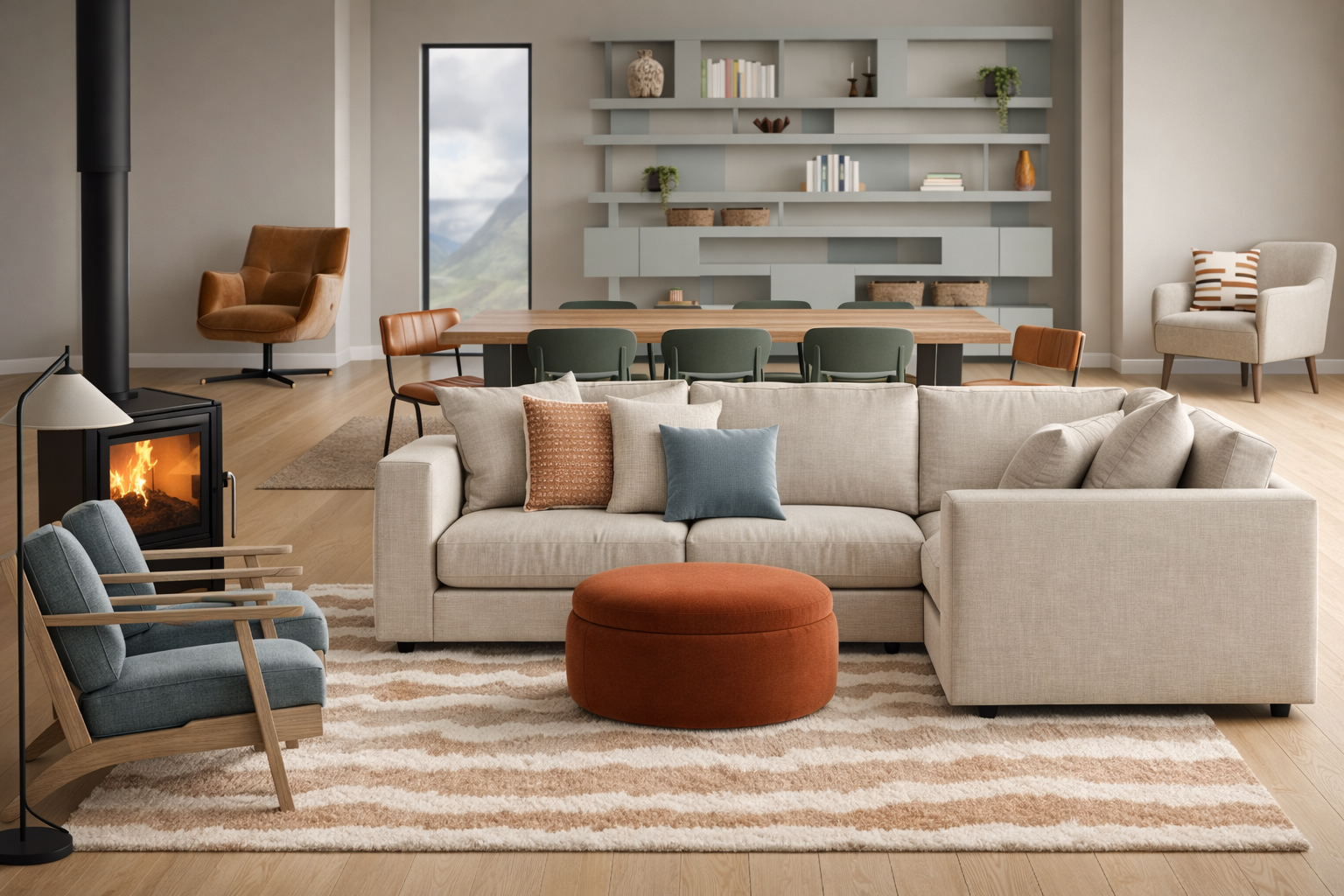
1. You're paying to start with a plan rather than a shopping basket
One of the easiest ways to make a home project more expensive is to start buying things before you've worked out the whole room.
It happens all the time. You find a sofa you love and order it. Then you start looking for a rug and realise the proportions are awkward. You choose the rug, which changes your thoughts about the curtains, which makes you question the wall colour, and before long you're redesigning the room around the first thing you happened to buy.
We'd approach it the other way around.
Before choosing individual products, we look at what the room needs to do, who uses it, how people move through it and what needs to fit inside it. We work out the layout and overall design direction first, so the individual buying decisions have something to belong to.
It isn't as immediately exciting as ordering the sofa.
It is considerably more useful.
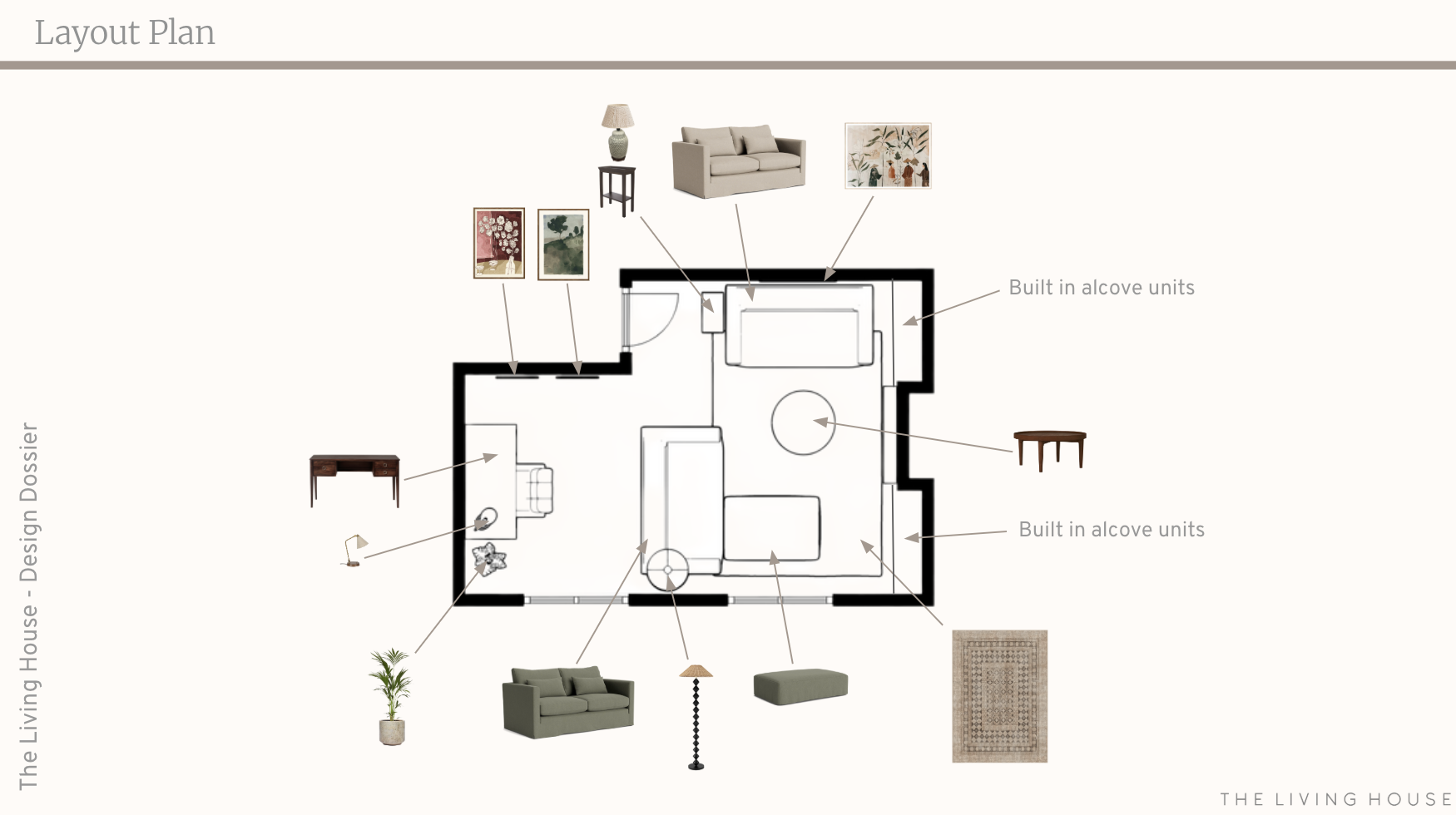
2. You're paying for someone to see the things you don't
This is one of the hardest parts of explaining the value of professional design because experience can make something look deceptively simple.
After years of looking at rooms, we notice things very quickly.
We might see that moving the sofa away from the wall creates space for another chair, that a dining table is interrupting the natural route through an open-plan room, or that the reason a living room feels uncomfortable isn't the colour scheme at all but the scale of the furniture.
We recently worked with a family planning their downstairs renovation. They already had plenty of ideas, but when we looked at the space as a whole, we were able to suggest possibilities they hadn't considered. They later told us that the new layout felt more spacious, more functional and much better suited to their day-to-day family life.
Nothing magical happened to the square footage.
The room was simply planned differently.
That's one of the things experience gives you: the ability to look beyond what is there now and see what else could be possible.
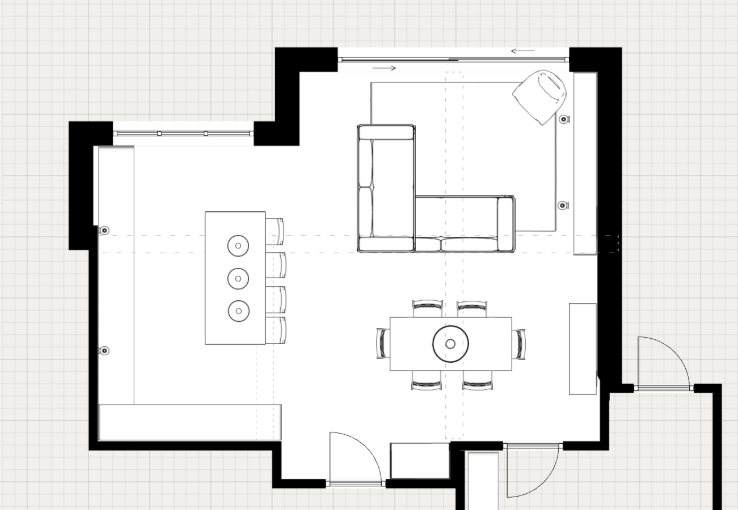
3. You're paying to avoid expensive mistakes
This is probably the most obvious financial argument for using an interior designer, but I don't think fear should be the only reason you hire one.
Yes, getting things wrong can be costly.
A sofa that's too large for the room isn't easily fixed. Bespoke curtains in the wrong colour are rather harder to return than a cushion. Realising the lighting isn't sufficient once decorating is finished is frustrating. Discovering that all the furniture you've carefully chosen looks slightly wrong together can be both expensive and incredibly disappointing.
We've heard versions of all of these stories over the years.
But the aim isn't simply to stop you making mistakes. It's to give you enough confidence in the overall plan that you don't spend the entire project worrying that you might be making one.
There's a big difference between hoping something will work and understanding why it will.
4. You're paying for your time back
This may actually be the biggest one.
Designing a room properly takes an extraordinary amount of time.
Take something seemingly straightforward like finding a sofa. You need to decide on the right dimensions, depth, fabric, colour and shape, compare suppliers, check delivery times, read specifications, order samples and work out whether it will fit through the front door.
Then you have to do the same thing with the chairs.
And the rug.
And the lighting.
And the curtains.
And the storage.
And all the other things that eventually make the room feel finished.
If you enjoy doing that, brilliant. Interior design can be enormously enjoyable.
But many of our clients have demanding jobs, busy family lives and a long list of things they'd rather do with a Sunday evening than compare seventeen almost identical side tables.
There comes a point where outsourcing the research isn't an indulgence. It's simply a sensible use of time.
We happily pay other professionals to do things they can do faster and better than we can. Interior design isn't really any different.
5. You're paying for fewer decisions, not more options
This is something I think people sometimes misunderstand about working with a designer.
You don't necessarily need someone to show you more things.
The internet has already taken care of that.
There are thousands of sofas, thousands of paint colours and an apparently infinite number of lights available before you've even got past page three of Google.
What most people actually need is someone to narrow them down.
With our Complete Design service, we don't hand you fifty possible sofas and wish you luck. We research the room and present a considered plan with pieces that have been selected because they work together and suit the way your family lives.
For someone who's spent months saving ideas and still can't decide, that can be an enormous relief.
Sometimes expertise is simply knowing what can safely be ignored.
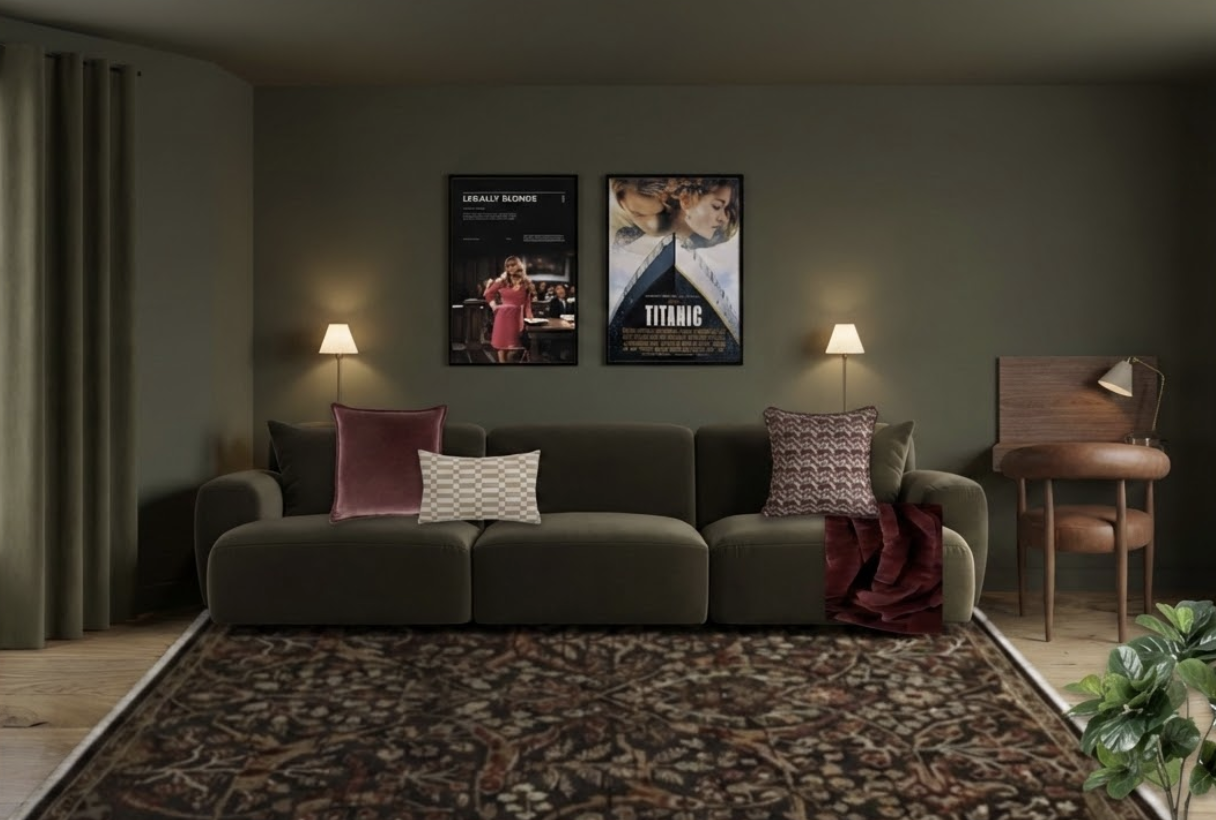
6. You're paying for somebody to consider the whole room
One of the reasons designing your own home can feel so overwhelming is that every decision affects another one.
The sofa affects the rug. The rug affects the furniture layout. The furniture layout affects the lighting. The lighting affects where sockets need to go. The flooring changes how the colours feel. The curtains alter the balance of the whole room.
None of those things is particularly difficult to choose individually.
Getting them all to work together is the difficult bit.
That's why we prefer to design the whole room before our clients begin making the bigger purchases. It gives us a chance to spot problems on paper or on screen rather than after the delivery van has left.
It also means you can see where you're going.
And I think that's something people underestimate. A clear plan makes the process far more enjoyable because every new purchase is taking you towards a result you've already considered rather than creating another decision you need to solve.
7. You're paying for expertise, but also a second opinion
Even interior designers can become indecisive in their own homes.
I've talked before about the empty dining end of my own open-plan room that I've been meaning to tackle for far longer than I'd care to admit. I can design somebody else's room perfectly happily, but when it's my own home there are suddenly too many possibilities, no deadline and a family with several different opinions about what the space should become.
There's something incredibly useful about having another experienced person challenge an idea, confirm that something works or suggest something you hadn't considered.
It's one of the reasons we work as two designers on Complete Design projects. There isn't one person disappearing into a room and emerging with the answer. Ideas are discussed, challenged and refined before they reach the client.
You still make the final decisions.
You simply aren't making them alone.
So, is £2,400 a lot to spend on interior design?
Our Complete Design service is £2,400 for a 4m x 5m room, and yes, £2,400 is a meaningful amount of money.
I don't think pretending otherwise helps anyone.
But whether it's expensive depends partly on what you're comparing it with.
If you're changing a couple of cushions and repainting the walls, £2,400 would clearly make very little sense.
If you're furnishing an entire living room, renovating an open-plan space or making decisions about flooring, furniture, lighting, window treatments and everything else that goes into a finished room, the amount you're investing in the project as a whole can become significant surprisingly quickly.
At that point, the design fee isn't paying for another thing to put in the room. It's paying for the plan behind all the things you're going to buy anyway.
It's paying for research you don't have to do, mistakes you are less likely to make, possibilities you might not have seen and the confidence to spend the larger amount well.
For the right project, that's a very different calculation.

When is hiring an interior designer probably worth it?
There isn't a magic project value where I'd suddenly say everyone needs a designer, but there are a few situations where professional help can make a particularly big difference.
If you're making several expensive decisions at once, struggling to understand the best layout, renovating or extending, furnishing a whole room from scratch, combining different tastes within one household, or simply finding that the project has been sitting untouched for months because you don't know where to begin, some level of professional input is probably worth considering.
The other big sign is time.
If you could do all the research yourself but realistically know you won't, that matters too.
A room that has been on your list for three years isn't necessarily waiting for more inspiration. Sometimes it's waiting for someone to turn it into a proper project.
When might you not need an interior designer?
I think this question is just as important.
You may not need us if you already have a clear design plan and feel confident executing it. You may not need a complete room design if there's only one specific decision holding you up. And you certainly don't need to hand over an entire project simply because you'd like reassurance on a layout or colour scheme.
That's why we offer different levels of help.
Sometimes a Power Hour is enough. You bring us the questions, ideas or decisions you're stuck on and we spend an hour working through them with you.
For a whole room where the problem is more along the lines of “I don't want to manage any of this anymore, please just help me work it all out”, The Complete Design is usually the better fit.
And sometimes, after speaking to somebody, we'll tell them they don't need either.
I'd much rather you choose the right level of help than pay us to solve a problem you don't actually have.
The real question isn't whether an interior designer is worth it
Perhaps the more useful question is:
What would professional help change for you?
Would it save you dozens of hours of research?
Would it stop you postponing the project for another year?
Would it help you spend confidently on furniture you've already decided to buy?
Would it show you possibilities for the room that you haven't considered?
Would it allow you to enjoy transforming your home instead of feeling as though you've accidentally acquired another part-time job?
If the answer to several of those is yes, then hiring an interior designer may be one of the more sensible investments you make in the room.
Because you're not really paying somebody to choose things for you.
You're paying for the thinking, experience and clarity that allow you to get from “We really need to sort this room out” to actually enjoying it.
And hopefully spending considerably fewer Sunday evenings looking at sofas in the process.
Wondering whether you actually need an interior designer?
If there's a room or renovation you've been thinking about and you're not sure what level of help would make sense, book a free Discovery Call with us.
Tell us about the room, what you're trying to achieve and what's holding you up. We'll explain how we could help and, just as importantly, we'll tell you if we think you'd be better off tackling it another way.
Book your free Discovery Call
Frequently Asked Questions
Is hiring an interior designer worth the money?
Hiring an interior designer can be worthwhile when you're making several significant decisions, furnishing or renovating a whole room, struggling with layout or spending a great deal of your own time researching options. A designer can help you develop a coherent plan, avoid unsuitable purchases and make decisions with greater confidence.
How much does an interior designer cost in the UK?
Interior design fees vary considerably depending on the designer, the size and complexity of the project and the level of service involved. Some designers charge hourly rates, others a fixed design fee, and full-service interior design may involve percentage-based fees. At The Living House, our online services range from focused design consultations to Complete Design, which is £120/sqm.
Can an interior designer save me money?
An interior designer may help you avoid costly mistakes such as buying furniture that's the wrong scale, choosing unsuitable finishes or making decisions that later have to be changed. They can also help identify where it's worth investing and where spending more is unlikely to improve the final result. The potential saving will depend on the project, so it shouldn't be assumed that design fees will always pay for themselves.
Can an interior designer save me time?
Yes. Researching layouts, furniture, finishes, lighting and suppliers can take many hours. A designer can undertake much of that research, narrow down the options and present a considered plan, reducing the amount of time you need to spend searching and comparing products yourself.
Do I need an interior designer for just one room?
Not necessarily, but a single room is often a good reason to use an interior designer if you're furnishing it from scratch or struggling to make it work. You also don't necessarily need a full design service. A consultation may be enough if you only need help with a few specific decisions.
What's the difference between an interior design consultation and a full room design?
A consultation is best when you have specific questions or need expert guidance to move a project forward. A full room design is more appropriate when you want the layout, overall look, furniture, finishes and other elements planned together for you. The right choice depends on how much of the project you want to manage yourself.
Is online interior design worth it?
Online interior design can work particularly well for people who want professional expertise and a complete design plan but are happy to purchase and implement the recommendations themselves. It can also make the process easier to fit around work and family life because meetings, plans and recommendations can be handled remotely.
Book your free Discovery Call →
The Living House is an online interior design studio helping families transform their homes into spaces that are beautiful, functional, and unmistakably theirs. Browse our services at thelivinghouse.co.uk.
RELATED BLOGS:

The plans have arrived. After all the conversations, site visits and decisions, there they are on the page: the new kitchen, the bigger opening onto the garden, the utility room you have been negotiating for years. It is an exciting moment.
It is also the moment when most people take a deep breath, say yes, that all looks right, and move on to finding a builder.
We would ask you to pause here - not to second-guess your architect, but to look at the plans one more time through a different lens.
Architectural plans resolve structure, planning and the shape of space. What they do not always show is where the family will drop their bags, whether everyone can move around the dining table without climbing over chairs, or where the lamp beside the sofa will go. A room can work perfectly as a piece of architecture and still become quietly frustrating once real furniture, storage and family life are added.
The good news is that a line on a drawing is the easiest and cheapest thing to change. Here are nine questions worth asking before that line becomes a wall.