
By Catherine Seagrave, Design Director and Co-Founder of The Living House
Becky is hosting Christmas this year, and she has a table problem. Then a chair problem. Then, because one decision always opens the door to the next, a “how much wood is too much wood?” problem.
By Christmas, she and her husband will have lived in their house for two years. The dining table and benches came with them from their smaller previous home, and hosting Christmas lunch has finally made her ask whether they’re right. The table turned out to be the easy part. She’s chosen a new one. The chairs are another matter, especially when you multiply the price by ten, for a household of two.
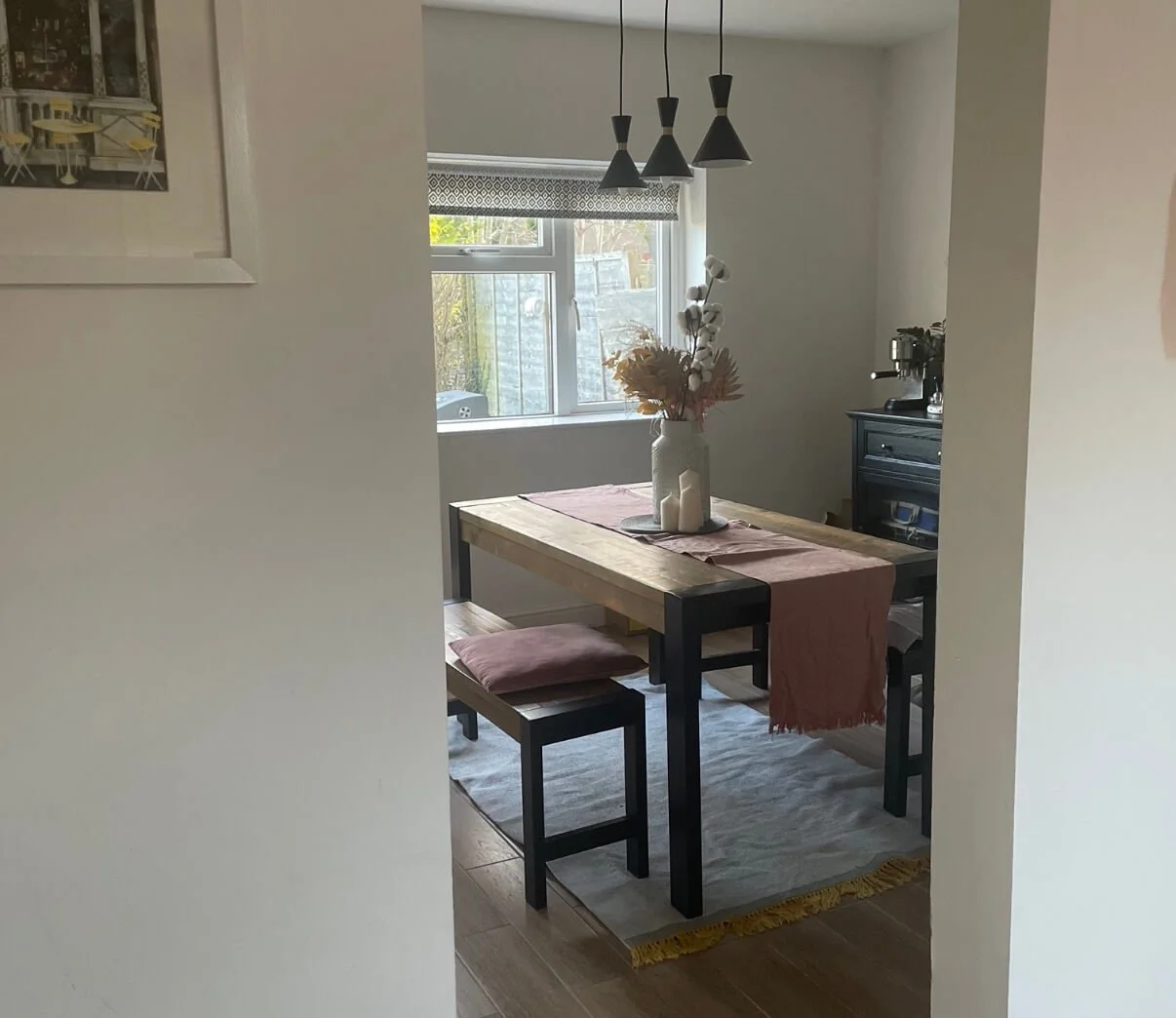
Oak dining table in Becky’s old house. Time for an upgrade!
Christmas can be a brilliant reason to take action. A date in the diary gets us off the fence and finally tackling the table, the sofa or the room we’ve been “meaning to sort” for two years.
But the furniture you buy for Christmas has to earn its keep for the rest of the year too. Those chairs need to be comfortable for an ordinary weekday dinner, and the sofa still has to work when the guests have gone home. Use that Christmas momentum, certainly, but give yourself time to think. A rushed purchase can be a very expensive way to get the house ready for one day.
Here are seven furniture buying mistakes we’d like to help you avoid.
1. Buying a dining table for your Christmas guest list
A table for ten makes sense if you regularly fill it. If most meals involve two people, it takes up a lot of room for something that only comes into its own once a year.
Think about ordinary dinners, friends coming round and how you might use the room in future. An extending dining table can be a good solution, provided it works well in the room at both sizes.
Mark out its everyday and fully extended sizes on the floor, allowing space to pull out the chairs and walk behind them. Check the path of travel through the room, too. Someone needs to carry the roast potatoes through. Check where the extension leaves live as well: some store inside the table, while others need a home of their own - and they can be large!
2. Choosing furniture you’re afraid to use
A Christmas table works hard, with hot dishes, candles, red wine and then Boxing Day board games. For the rest of the year it might be homework, laptops, art projects and teenagers who have never heard of a coaster.
A finish that needs more care than you want to give it can leave you hovering over the table instead of enjoying it. Before buying, ask the retailer what protection it needs from heat and spills, how to clean it and whether marks can be repaired. A sample is useful for checking the colour and texture alongside your flooring and other furniture.
There’s nothing wrong with using mats and coasters. Just make sure you’re happy with the upkeep before committing to a table your family will use every day.
3. Buying dining chairs without planning for comfort and storage
If six chairs cover your usual needs and you need ten at Christmas, what happens to the other four? A dining chair shoehorned into a bedroom corner rarely does much for the bedroom.
I’d much rather see mismatched chairs around the Christmas table than dining chairs looking out of place in several rooms all year. A dressing table or bedroom chair can come downstairs for lunch, then return to the room it was chosen for. Check seat heights, comfort and whether the arms fit under the table.

The chairs don’t all have to match for the table to look lovely. Borrow a few from around the house and let them go home again after Christmas.
Then there’s the sit test. Could you stay in these chairs through the starter, the main, pudding and the “just one more glass” stage? Give them a proper try, ideally at a table of the right height. Think about who else will use them, especially anyone who needs more support or finds a low chair difficult to get out of.
Becky is also thinking ahead to family life, so she’s avoiding upholstery and looking carefully at chair shapes, right down to the gaps in the backs. Wood seems sensible, until you remember she already has a wooden floor and a wooden table.
I suspect her family Christmas may become a bring-your-own-chair affair, which seems a perfectly good solution. She still needs six everyday chairs, though.
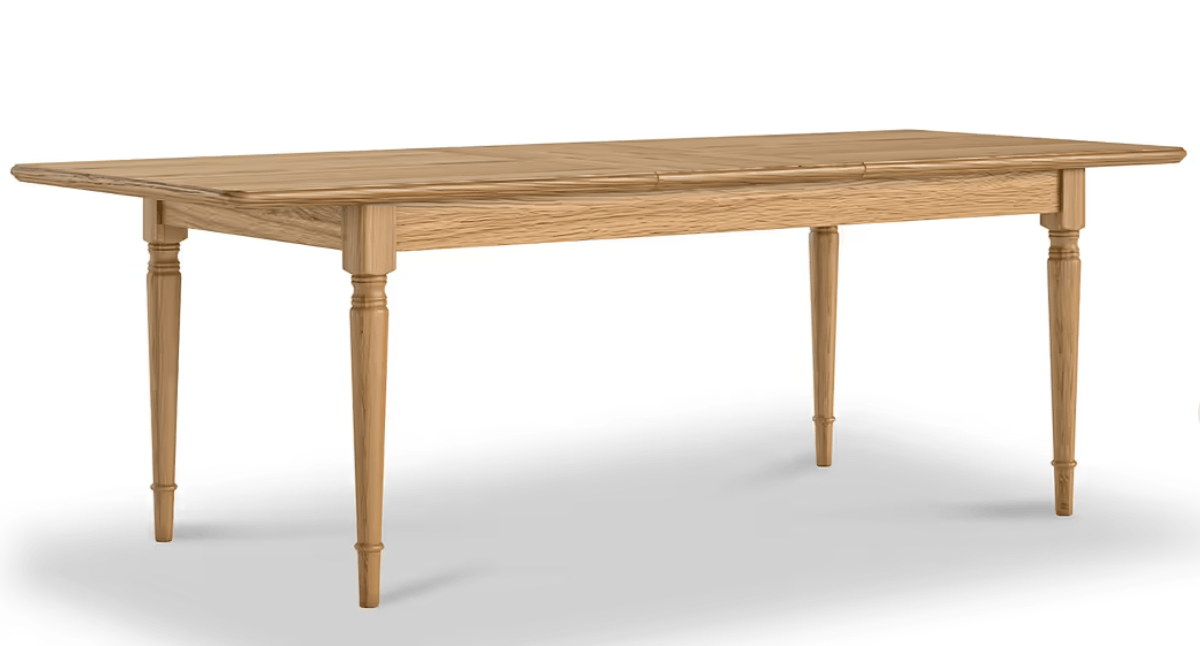
The is the table Becky is getting from Roseland Furniture!
4. Giving the Christmas tree permanent control of the room
We sometimes suggest a window seat in a bay, or a corner sofa that would improve the seating, only to hear: “But that’s where the Christmas tree goes.”
My designer head wants the room to work for everyday life. My heart understands completely. I love a big, tall, real tree, and choosing one is a family tradition. Getting it into the car, folding the children in around it and finding pine needles everywhere are all part of the fun. And I do like a tree with space around it. It’s the star of the show while it’s here, and I don’t want it apologetically shoved behind a sofa.
In my own home, two reception rooms have been knocked through. The tree used to look lovely beside the fireplace, until we got a corner sofa. The bay window was another beautiful option, but I chose a built-in bench seat with toy storage underneath. Then an exuberant, decoration-loving puppy meant the tree spent a year or so on top of a sideboard.
The other half of the room is largely empty. The sons play VR games there and want the space, but I suspect I’m also attached to keeping it free for a tree in all its sparkling glory. Perhaps that’s my one compromise too many.

A Christmas tree can take centre stage for a few weeks, while the window seat earns its keep all year. The dog certainly makes good use of it.
We recommend planning the Christmas arrangement alongside your everyday layout, including what could move temporarily and where it would go. That way you can make space for the tree without giving up seating or storage your family would use all year.
5. Buying a sofa bed without thinking about bedtime
A sofa bed in an open-plan kitchen, dining and living space can look like an excellent idea, until someone tries to sleep beside the dishwasher, the pets and a teenager on a midnight fridge raid.
Think through the whole stay. Can guests go to bed while everyone else is still up? Can you cover the bifold doors for privacy and keep early light from the skylights out? Who needs the kettle first?

Think through the whole overnight stay, from space around the open sofa bed to a bedside light, curtains for privacy and somewhere for the bags.
If you have a study or snug with a door, it may be a better place for overnight guests. Measure the bed fully open, including space to move around it, and work out where bedding and bags will go. Clearing a little wardrobe space may help your guests more than another piece of furniture.
Test the bed as well as the sitting comfort, especially if it will also be your everyday sofa. Our guide to choosing the right sofa covers what to consider before you buy.
6. Letting the Christmas deadline make the decision
This is where I’d be quite firm. Don’t let the wish to have the house finished push you into buying something you haven’t properly considered.
Black Friday emails, countdown timers and “order now for Christmas” banners all turn up just as you’re thinking about the house. A sale price won’t make an uncomfortable chair any better to sit in.
In a January 2026 survey of 2,000 UK adults for Barker and Stonehouse, 37% said they regretted at least one furniture purchase. A sofa in the wrong colour, uncomfortable chairs or a table that’s too big can become a very expensive way to finish a room quickly.
Prioritise what the people coming actually need. Everyone needs somewhere suitable to sit for lunch. Overnight guests need somewhere comfortable to sleep. Much of the rest can wait.
Guests are unlikely to remember every finishing touch. After a few glasses of wine, who is inspecting the occasional tables? Borrowing a few chairs for Christmas buys you time to choose something you’ll love for years.
7. Forgetting to check Christmas delivery dates
After all that thinking, do check the delivery dates. A dining table arriving on 6 January isn’t quite the same.
Confirm delivery for the exact size, finish and postcode, and check whether the quoted date means dispatch or arrival. Allow time for assembly and inspection, and keep your existing furniture until the replacement has arrived and been checked.
Measure delivery access as well as the room. A sofa that fits the living room still has to get through the front door, along the hallway and around any awkward corners.
If the right piece won’t arrive in time, make a temporary plan. “Available before Christmas” is a useful detail, but a poor reason to choose something you don’t really want.
Choose furniture that earns its keep all year
You could buy a table and chairs online tonight. But if you’re going to spend the money, you want them to be comfortable, to last and to bring something to the room. They also need to work with what you already have, or with the changes you’re planning.
Christmas may be why the decision has jumped up the list. That’s a good reason to get on with it, and also a good moment to work through the questions before you spend.
This is where a Power Hour helps. We work through these decisions every day for our clients, helping them see the options and decide what matters most.
You’ll have 60 minutes online with Becky and me, with preparation beforehand, a recording of the session and a written action plan afterwards. The Power Hour is £475 including VAT.
If you’re making decisions before Christmas, find out more about our Power Hour interior design consultation while there’s still time to put the advice into practice. We’d love to help you choose furniture that earns its keep long after the decorations come down.
RELATED BLOGS:

Planning an extension or taking walls down? Before you commit to open plan living, think about where the sofas will go, what happens to the rooms you already have, and whether anyone will be able to find a quiet corner. Sometimes, a family home works better with a wall in the way.