
By Catherine Seagrave, Design Director and Co-Founder of The Living House
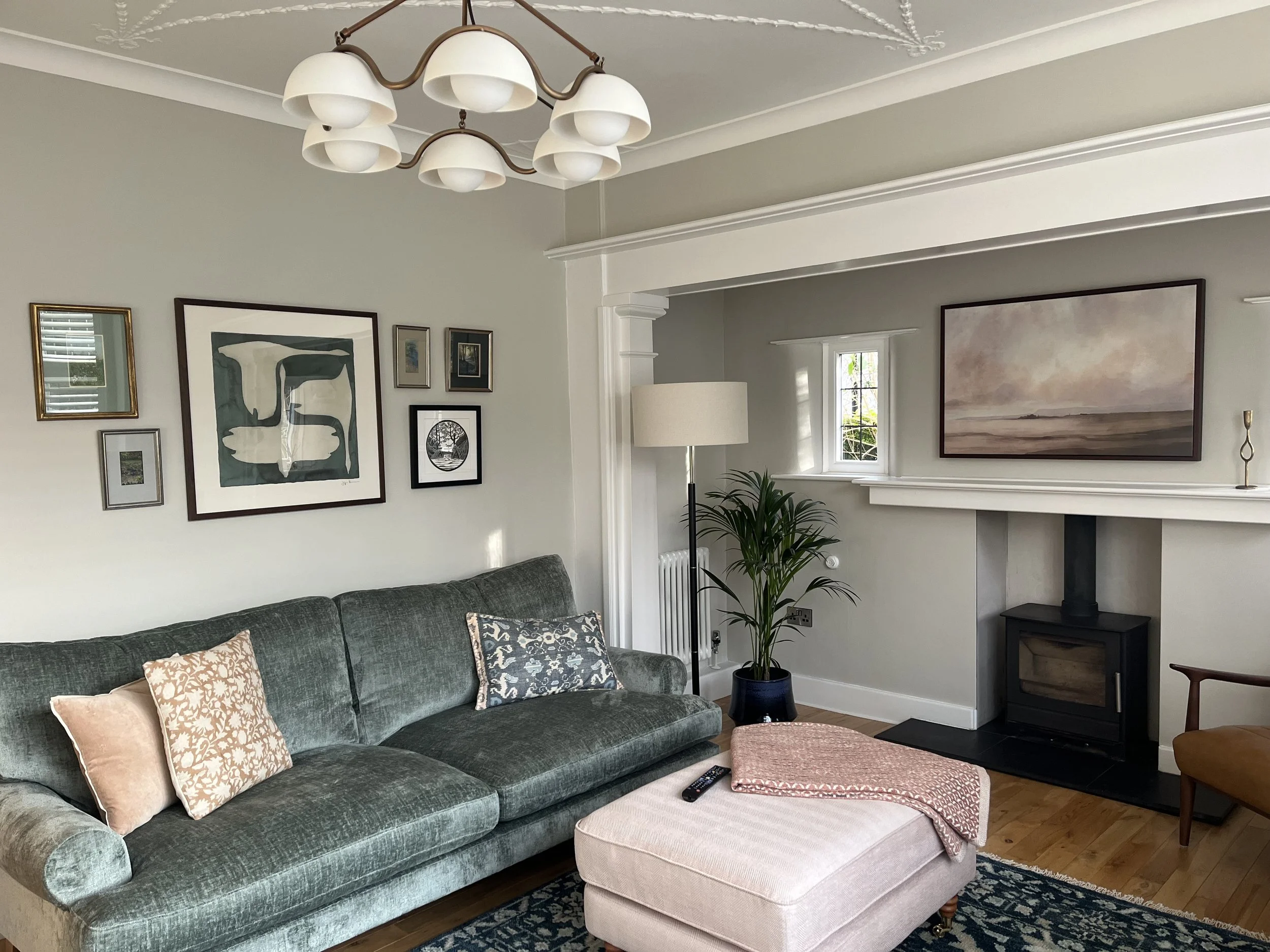
A family living room designed to feel comfortable, welcoming and practical, with a considered furniture layout, layered textures and plenty of personality. A lovely room to spend time in, not just look at.
Most of my life seems to be run by the things that shout the loudest, the jobs with a deadline attached or the ones that become more difficult if I don't deal with them quickly enough. I need to book the parents' evening appointments before all the sensible slots disappear, work out what we're eating this week, organise my daughter's 18th birthday party, find someone to look at the irritating leak before the next downpour and ring the vet's about the dog's booster vaccination.
You know the sort of thing. They're the jobs that elbow everything else out of the way because they feel urgent, even if they aren't necessarily the things that matter most.
Then there are the quieter things on the list, the ones that don't demand attention in quite the same way. The room that has never really worked, the cupboard you can't find anything in, the chair that has become a permanent dumping ground, the living room you've talked about changing for two years or the kitchen that somehow makes preparing dinner more difficult than it needs to be.
In my own home, it's the bathroom floor. When we moved in twenty years ago, replacing it was one of those things we absolutely had to do, and yet somehow it's still there. Badly fitted, with gaps between the boards that collect dust and hair and are almost impossible to clean properly. Lovely. Perhaps writing this will finally shame me into getting it sorted.
The thing about these jobs is that nobody is going to email you tomorrow morning asking why you haven't sorted your living room layout, and the bathroom floor isn't going to give me a deadline and threaten consequences if I miss it. So we continue living with things that aren't quite right, often for far longer than we ever intended.
But I've been thinking recently that perhaps these quieter things matter more than we give them credit for, because your home isn't just another job on your list. It's the place supporting you while you try to do everything else.
Your home should make everyday life easier
At the end of a long day, your home is supposed to be the place where you can finally stop, put your bag down, make a cup of tea, sit on the sofa and feel yourself relax a little.
When your home doesn't work particularly well, though, it can have almost the opposite effect. You walk through the door and immediately see the pile of things that still don't have anywhere to go, you have to move something before you can sit down, the kitchen worktop has become home to school letters, post, chargers and all the random stuff every family seems to accumulate, and the room you wanted to feel cosy somehow still doesn't.
And when you've spent the whole day dealing with other people's needs, it's particularly frustrating to come home and find that the house seems to need things from you as well.
I'd much rather our homes did a little more of the work for us.
Good interior design isn't only about how your home looks
I think this is where interior design is sometimes misunderstood, because of course we care enormously about how a room looks. Colour, texture, proportion, lighting and all the lovely things that give a home personality are a huge part of what we do, but a beautiful room that makes everyday life more difficult isn't a particularly successful room.
For us, good design starts much earlier, with questions about how people actually live. Where do you put your keys when you come in? Where do the school bags naturally land? Can everyone sit comfortably in the living room? Is there somewhere beside the sofa to put a cup of tea? Can you move from the kitchen to the dining table without walking around an enormous island? Does the storage exist where the things are actually used? Is the lighting good enough for what you do in the room, and can you find what you need without opening five cupboards first?
These might sound like tiny details, but they're exactly the things that determine how enjoyable a room is to use once the excitement of the new furniture has worn off.
The little frustrations add up
We often speak to clients who tell us that a room just doesn't feel right, but they can't quite explain why, and sometimes there is nothing obviously wrong with it. It might be nicely decorated, the furniture is perfectly good and there is enough space, but when we start asking questions, the small frustrations begin to appear.
Nobody sits in the chair because it's too far away from the rest of the seating, you can't see what the children are doing while you're cooking, the coffee table is constantly being moved because it blocks the way through the room, or the dining room has quietly become somewhere to put things rather than somewhere anyone wants to eat.
Families are incredibly adaptable, so they simply work around all of this without really noticing how much effort they're making. They step over things, move things, carry things from one room to another or stop using the room altogether, and eventually that slightly awkward way of living starts to feel normal.
One of the advantages of having someone else look at your home is that we haven't spent years learning to work around the problems, so we tend to spot them much more quickly.
We had a client whose bedroom had been arranged in exactly the same way for years. The bed faced the window, which seemed perfectly sensible because of the view, except the blinds were usually down, so they weren't actually enjoying that view at all.
The wardrobes were large and bulky, dominating the room as you came through the door, but they were perfectly good wardrobes that the client wanted to keep. Meanwhile, the side of the bed nearest the chimney breast was cramped, with books and other bits and pieces piling up beside it. It was a generously sized bedroom, yet somehow everything felt squeezed into one corner, creating an awkward arrangement that she'd simply become used to living with.
When we looked at the room, our immediate suggestion was to turn the bed through 90 degrees so that it faced the chimney breast instead. This opened up much more usable space around the bed, with enough room for larger chests of drawers and proper book storage in place of the small bedside tables, as well as an ottoman at the foot of the bed.
We also suggested moving the existing wardrobes into the alcoves either side of the chimney breast, where they would be far less imposing than they had been near the entrance. It gave the room a much better sense of balance and allowed the lovely Victorian fireplace to become a feature, rather than being almost hidden beside the bed.
It was a relatively straightforward change from our perspective, but for the client, who had spent years living with the room arranged in one particular way, it was a completely different way of looking at the space.
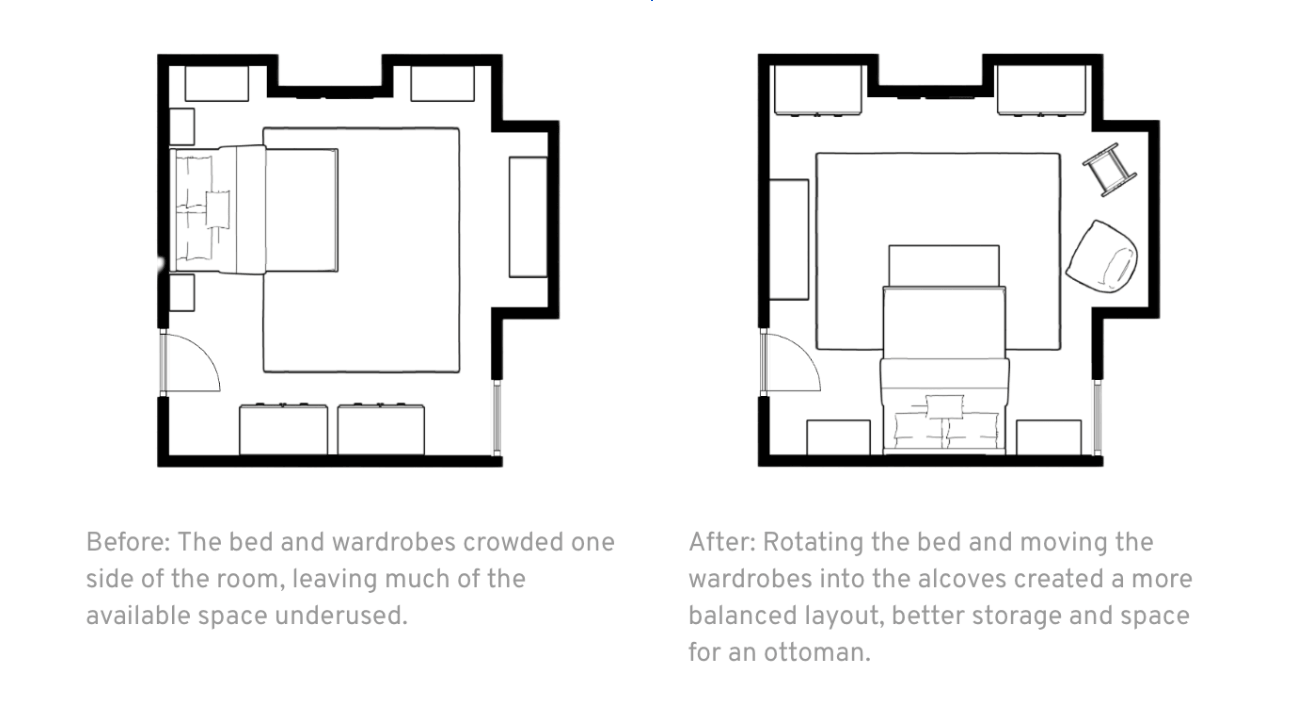
Before and after bedroom floorplans showing how rotating the bed 90 degrees and relocating wardrobes into alcoves improved the layout, storage and usable floor space.
She's since had the room redecorated, with new electrical work and carpet, and when she got back in touch she told us:
"The most striking improvement has been moving the furniture to the positions you suggested and feeling as though it's a completely new room!"
I love that, because although she'd made some lovely changes to the finishes, it was moving the furniture that had made the biggest difference. Sometimes you become so familiar with your home that it's almost impossible to imagine things anywhere else, even when a relatively simple change could transform how the whole room works.
Sometimes the problem isn't a lack of storage
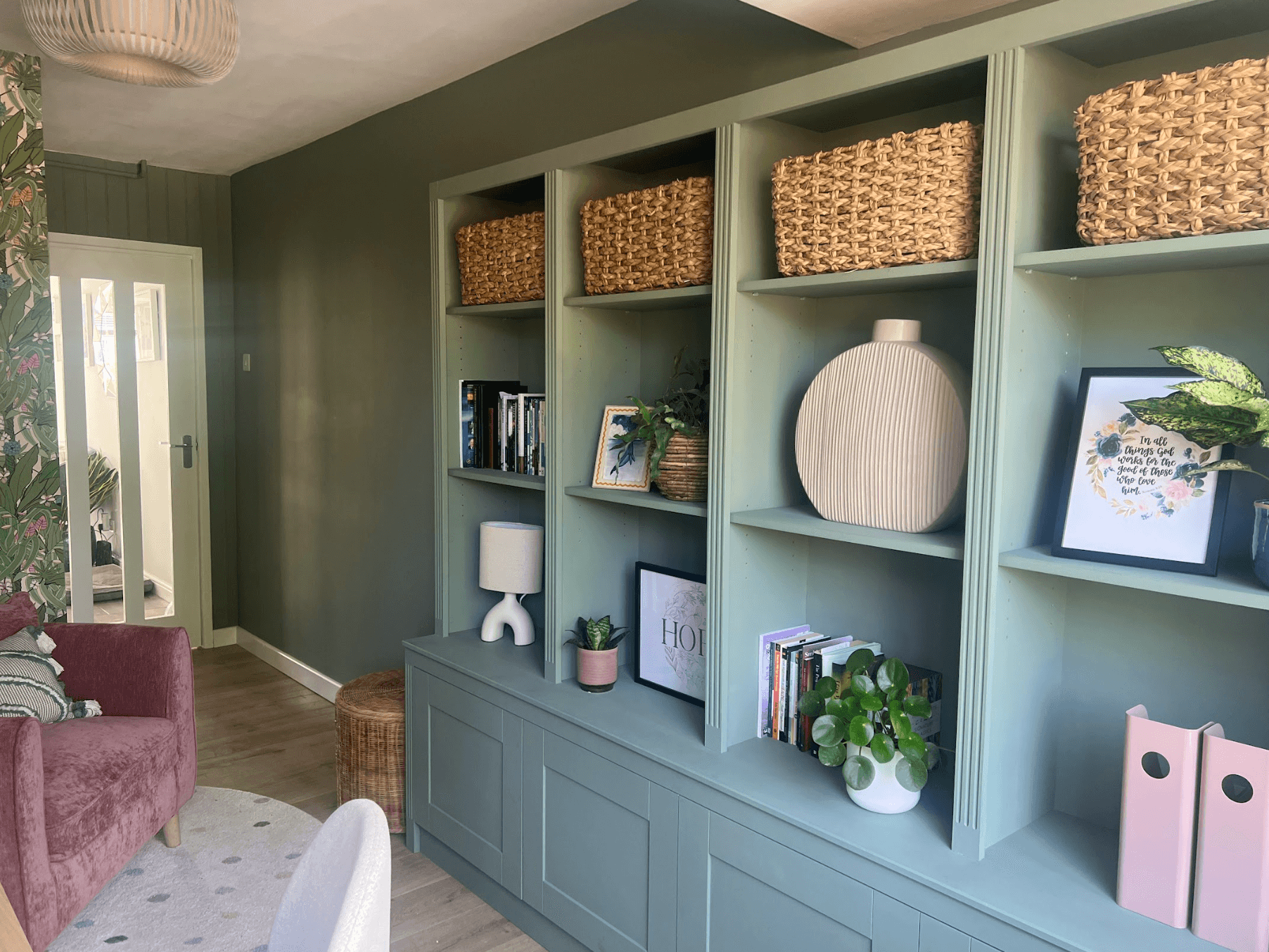
Thoughtfully designed storage makes family life easier. This bespoke shelving combines concealed cupboards and practical baskets for everyday clutter, with open shelves for books, plants and favourite accessories, keeping everything organised without compromising on style.
This comes up constantly because someone will often tell us that they need more storage, and sometimes they absolutely do, but quite often what they really need is storage in the right place.
If everyone comes through the back door, having beautiful coat storage beside the front door isn't going to solve the pile of coats in the kitchen. If homework happens at the dining table, storing all the pens, paper and school bits upstairs means those things are unlikely to make the journey back there every evening. And if you curl up on the sofa with blankets every night, a lovely storage cupboard across the room may not be quite as useful as a basket beside the sofa.
Too many homes are organised for an imaginary family who always puts everything away immediately, whereas real families tend to choose whatever is quickest and easiest, particularly when everyone is tired and hungry.
Good design needs to work with those habits rather than expecting us all to suddenly become better behaved.
If the easiest place to put something is also the place where it belongs, the house has a much better chance of staying reasonably organised without somebody constantly having to police it.
Layout can make life harder without you realising it
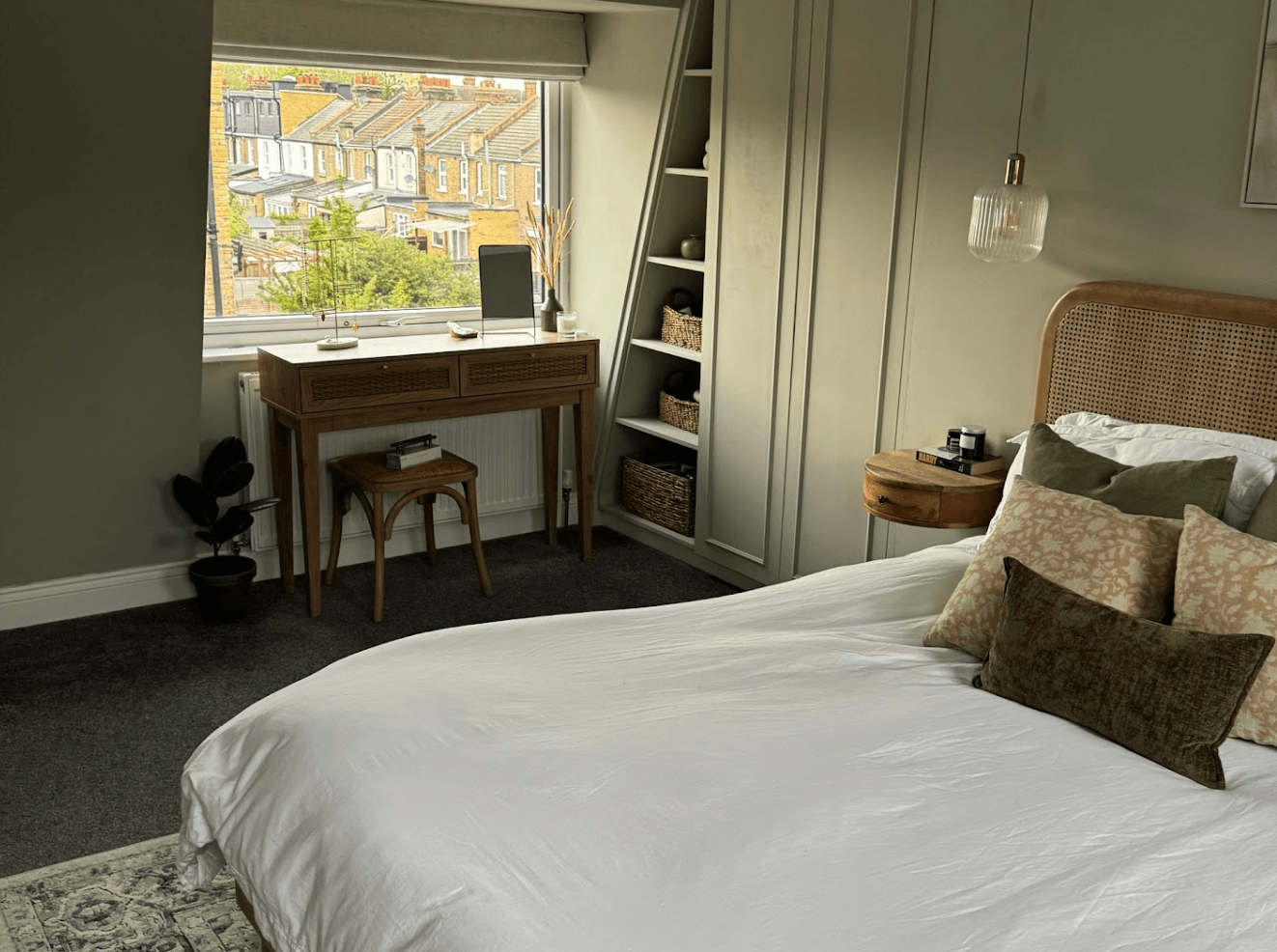
Making the most of every inch. This bedroom combines a cosy sleeping area with a dressing table positioned to enjoy the natural light, while fitted wardrobes and shelves make clever use of the awkward space beneath the sloping ceiling.
Furniture layout is another quiet source of frustration because a room can contain all the right pieces and still feel uncomfortable simply because they are in the wrong places.
Perhaps everyone sits too far apart to have a proper conversation, maybe you have to walk between the television and the sofa every time you cross the room, the dining table feels squeezed into a corner, or the enormous sofa you loved online has taken over so much space that everything else has had to fit around it.
We spend a lot of time working on layouts because they influence almost everything that comes afterwards. If the layout works well, the room usually becomes easier to furnish, easier to light and much nicer to use, whereas if it doesn't, even beautiful furniture can end up feeling slightly disappointing.
This matters particularly in family homes because rooms are rarely doing just one job. A living room might need to work for television, conversation, reading, piano practice, children, teenagers, dogs and friends coming over, sometimes all within the same evening.
The answer isn't always more space, and we've certainly seen plenty of houses where there's more than enough square footage but the rooms still don't work particularly well. Very often it's about using the space you already have more intelligently, making sure furniture is positioned sensibly and giving each part of the room a proper purpose.
Unfinished rooms take up more headspace than we think
I have experience of this one myself, because I've talked before about the dining end of my own open-plan room, which I managed to leave largely empty for far longer than any interior designer would probably like to admit.
Nothing terrible happened because it wasn't finished, of course, but every time I walked through it I noticed. I thought about what we could do there, whether we needed another sofa, whether the teenagers needed the space more, whether we should put a dining table back, and then something more urgent happened and I forgot about it again until the next time I walked through.
I wasn't spending hours worrying about it, but it was a decision that kept returning, usually at an inconvenient moment when I didn't have the time to do anything useful about it.
That's something I think we underestimate about unfinished rooms. It's not necessarily that they're causing enormous stress, but they become a little reminder of something we still haven't dealt with, and when your head is already full of everything else that needs organising, it's one more thing you'd quite like to stop thinking about
The goal isn't a perfect home
I don't think any of this means we should aim for homes where everything is permanently tidy and every drawer is beautifully organised, because that certainly wouldn't describe mine.
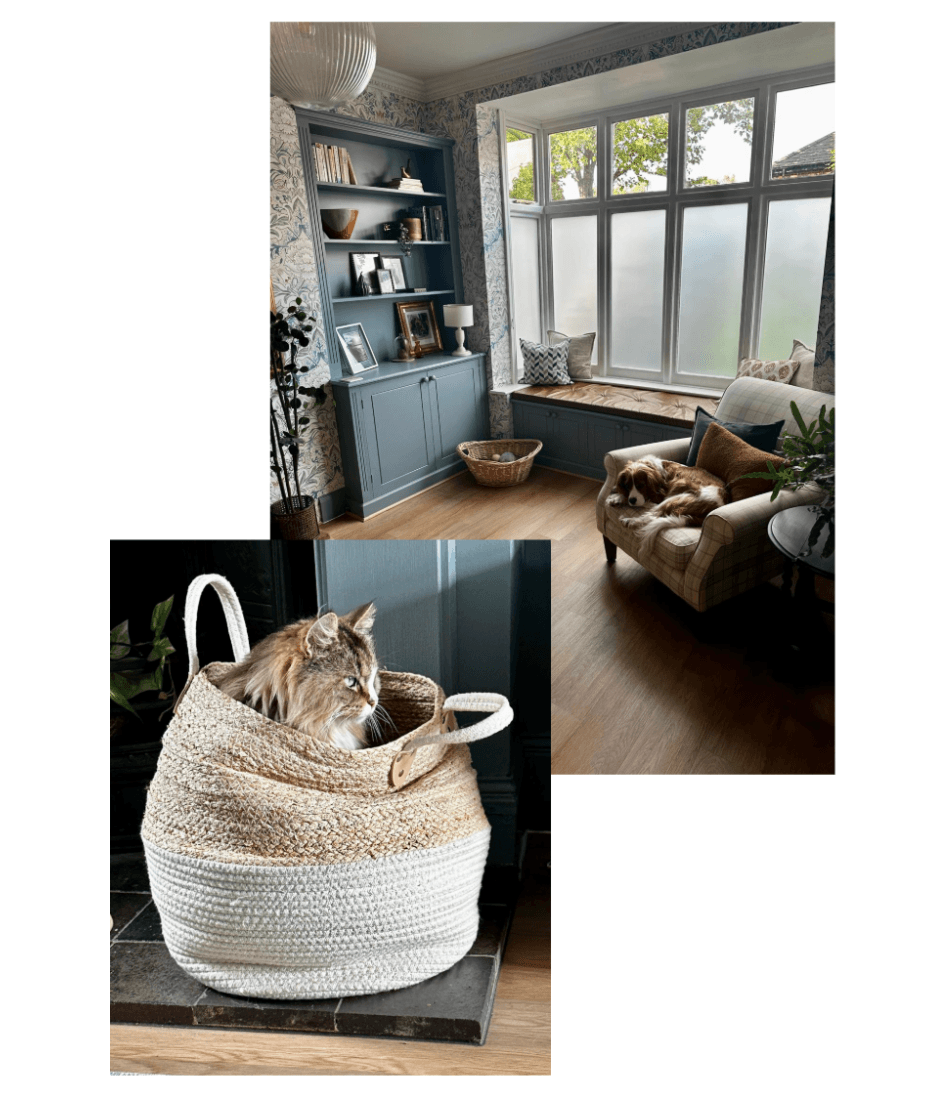
A home should work for every member of the family, including the four-legged ones! This cosy corner combines practical built-in storage with a lovely window seat, creating somewhere comfortable to relax, while the pets have clearly found their own favourite spots.
Family homes are supposed to have evidence of family life in them. Shoes will appear where they shouldn't, teenagers will leave glasses in bedrooms, dogs will choose the most inconvenient possible place to sleep, and there will always be a surface somewhere in the house attracting crumbs and things that nobody knows what to do with.
And quite frankly, I wouldn't want to live in a house where everyone was frightened of putting a cup down or disturbing the cushions.
What I would like is a house where the layout makes sense, there's sufficient storage in useful places, everyone has somewhere comfortable to sit and the rooms feel welcoming without requiring constant effort to keep them that way.
That's a much more realistic ambition than perfection, and it's one of the reasons we spend so much time understanding how our clients' families actually live before we start designing anything.
Why does the home to do list always get pushed down?
I think there's another reason these projects often remain unfinished, beyond simply being busy, and it's that once you start thinking about changing a room properly, the number of decisions involved can feel rather overwhelming.
You might know that you want to change the living room, but then you start wondering whether the furniture layout should change, whether to keep the existing sofa, which colours would work, what size rug you need and whether it would make more sense to redecorate the whole space rather than just replace a few pieces.
Before long, what started as a fairly simple wish to improve a room has turned into a project requiring research, measurements, decisions and probably a reasonable amount of money.
It's understandable that people put that off, particularly when there are so many other things competing for their attention.
We regularly speak to clients who have been meaning to tackle a particular room for two, three or even five years (or twenty in the case of my bathroom!), and often it's because they care enough about getting it right that they don't want to make decisions in a hurry.
But the longer they leave it, the more the project seems to grow in their heads, until it feels like something they need to devote an enormous amount of time to, rather than something that could be worked through with a clear plan and a little expert help.
Your home deserves a place on the list too

A living room designed for real family life, with comfortable seating arranged for conversation, clever built-in storage and a cosy reading spot in the bay window. A beautiful room that works just as well for everyday relaxation as it does for entertaining.
I think it's worth remembering that we spend a huge amount of time making sure everything else in family life runs smoothly, from school and work to appointments, meals and the endless logistics of getting everybody where they need to be.
Yet the house where all of that life happens is often expected to just keep muddling along, regardless of whether it's making things easier or harder.
Of course, not every awkward cupboard needs redesigning and not every unfinished room needs to become an immediate project, but there is something to be said for recognising when a space has been frustrating you for so long that it's worth doing something about it.
If you spend time and money getting your home to work better, the benefit isn't limited to the day the decorating is finished. You get to enjoy those improvements every morning when you're trying to get everyone out of the house, every evening when you finally sit down and every weekend when the family is all at home together.
Those ordinary days are what we're really designing for.
What would make your home easier to live in?
If you're looking around your home and wondering where to begin, I wouldn't start by asking what you want to buy.
Instead, for the next few days, pay attention to the things that irritate you and notice where clutter naturally gathers, what you repeatedly have to move, which rooms nobody really uses, where everyone chooses to sit, what you can never find and which jobs in the house seem to take more effort than they should.
You might discover that the hallway needs somewhere better for bags and shoes, the living room needs a different furniture arrangement, or the kitchen isn't short of storage at all but would be far easier to use if a few things were in different places.
And if there's a particular room you walk into and immediately think, "We really need to sort this", make that the first one you look at.
Once you've identified what's actually bothering you, you've got a much better starting point than simply deciding the room needs redecorating.
Perhaps your home doesn't need more of your time
One of the reasons we created The Complete Design was for people who know they want to improve their homes but don't particularly want to take on all the research, planning and decision making themselves.
We start by understanding how your family actually lives and what isn't working now, then create a complete design around you, from the furniture layout and overall look of the room through to the lighting, flooring, window treatments, furniture and finishing details.
You receive one considered plan and a curated shopping list, so rather than spending months trying to work out how everything should fit together, you can start bringing the room to life knowing the decisions have been properly thought through.
It means you can stop carrying that particular project around in your head and enjoy the home you've been meaning to create for such a long time.
If there's a room that's been quietly sitting on your own to do list, book a free Discovery Call and tell us about it. We'll talk through what's bothering you, what you'd love the room to become and whether Complete Design is the right way for us to help.
Book a free Discovery Call →
Frequently Asked Questions
Can the way your home is designed make everyday life more stressful?
It can. Poor layout, inadequate or badly positioned storage, insufficient lighting and rooms that don't suit the way a family lives can all create small, repeated frustrations. Thoughtful interior design aims to reduce these problems by making the home work more naturally around everyday routines.
Why does my home feel stressful even when it isn't particularly messy?
Clutter is only one reason a home can feel difficult to live in, because furniture layout, unfinished rooms, poor storage, lighting and a lack of clear purpose for a space can all contribute to a feeling that the home requires constant attention.
How can I make my family home feel calmer?
Start by noticing where everyday frustrations happen and look at where clutter naturally collects, which rooms aren't being used, where storage is missing or inconvenient and whether furniture is making it difficult to move through or use a room comfortably. Solving these practical issues can often make a home feel calmer without requiring it to be perfectly tidy.
Should I organise my home before redecorating?
It's usually useful to understand how a room needs to function before choosing finishes or furniture, because working out what needs to be stored, how the room is used and where furniture should sit can prevent you from decorating a room beautifully without solving the practical problems that were frustrating you in the first place.
Can an interior designer make a home more functional?
Yes. Interior design isn't only concerned with aesthetics, and a designer can help improve layouts, furniture placement, storage, lighting and the way rooms connect, as well as creating a cohesive look. In family homes, these practical decisions can make everyday routines much easier.
When should I get help with a room I keep putting off?
If a room has been on your to do list for months or years, you know it isn't working but still don't have a clear plan for changing it, professional help may be useful. A consultation can help with specific problems, while a complete room design may be better if you want the layout, overall look and individual pieces worked out for you.
The Living House is an online interior design studio helping families transform their homes into spaces that are beautiful, functional, and unmistakably theirs. Browse our services at thelivinghouse.co.uk.
RELATED BLOGS:


After years out of favour, burgundy is back in a fresher, more playful form. Here is how to use this warm wine-red in a way that feels inviting, modern and entirely your own.